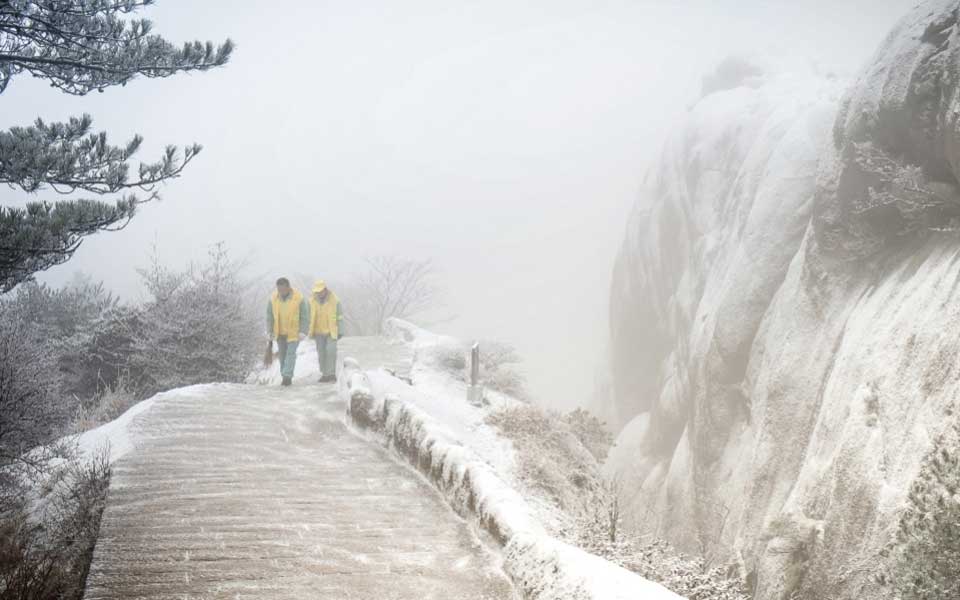
Keeping outdoor walking surfaces clear of ice in the winter is a crucial practice at many businesses. Not only does ice removal offer aesthetic benefits, but it can also help keep you, your coworkers and your customers protected from the risk of slips and trips on-site.
Here’s how you can achieve effective and safe snow removal measures at your outfitter this winter.
Ice Removal Best Practices for Outfitters
Utilize the following guidance to ensure proper ice removal procedures on your site:
Use the right mixture. The most effective method for de-icing an outdoor walking surface is by applying a chemical mixture throughout the area to either melt ice that already exists or prevent ice from forming. This mixture typically includes rock salt (sodium chloride), magnesium chloride pellets or calcium chloride pellets. Make sure to use the correct mixture for the conditions at hand. Rock salt is most effective in temperatures above 5°F.
Consider incorporating sand into your mixture before applying it. Doing so will help limit the amount of mixture that you use and allow for extra traction, thus minimizing the risk of slips and trips.
Watch the weather. Keep an eye on the weather forecast to determine when you need to apply the de-icing mixture to outdoor walking surfaces. It should be applied when temperatures are below freezing or if conditions such as snow, hail or sleet are possible.
Apply the mixture correctly. Make sure you apply the de-icing mixture in thin, even layers across outdoor walking surfaces. Try to apply one layer before conditions occur, one or more layers while these conditions are taking place and a final layer after conditions have passed. Keep in mind that if there’s snow on a surface, it will need to be shoveled before you apply the de-icing mixture. Simplify the de-icing process by shoveling snow after every few inches of accumulation rather than once it’s piled up.
Protect your hands. Keep your hands properly protected when applying the de-icing mixture by wearing thick mittens and using a scoop to distribute the mixture.
Eliminate excess materials. When temperatures warm up and the de-icing mixture is no longer necessary, be sure to properly dispose of any remaining mixture left on outdoor walking surfaces. Leaving excess mixture on a surface when it isn’t needed could end up creating, rather than removing, slip and trip hazards, as well as potentially damaging the surface itself.
Operating Snow Removal Machinery
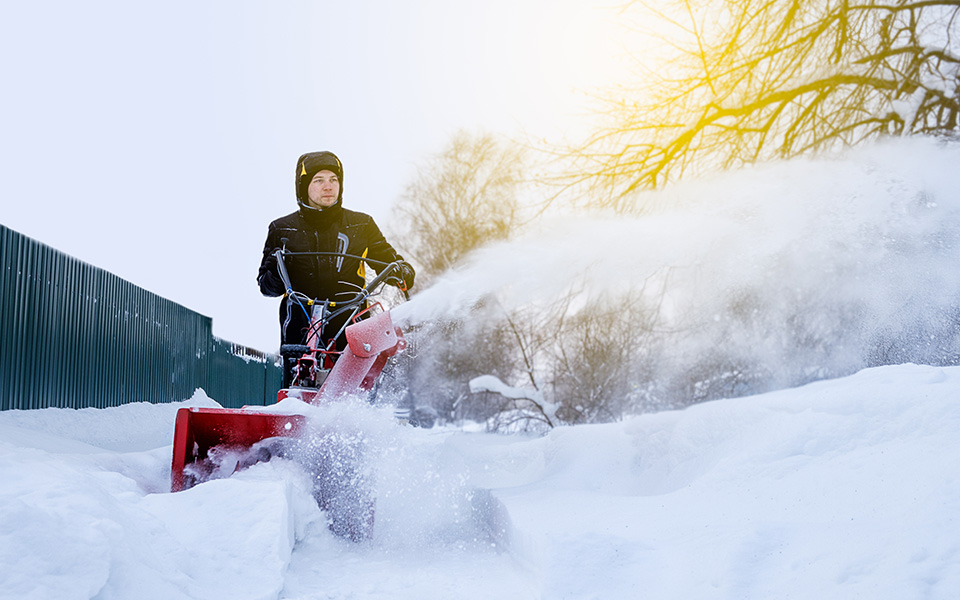
When winter arrives and brings snowy conditions, routinely clear your parking lot and any other areas surrounding your property of snowfall. That’s where equipment such as a snow blower or snowplow can help.
However, while using such equipment allows you to clear snow promptly, there are also numerous safety risks to keep in mind.
Before You Begin
- Read the equipment’s operating manual.
- Look for items hidden in the snow that you wouldn’t want to hit or run over.
- Make sure the area is clear of people.
When Using a Snow Blower
- Be aware of where you’re aiming the chute.
- Never blow snow toward people or cars.
- Do not override automatic shutoff features.
- Operate the blower at a speed no faster than a walk.
- Never reach into the blower shoot with your hands for any reason, even if the machine is off.
When Using a Snowplow
- When beginning a pass, always start moving and then drop the plow blade.
- Begin to stop as you approach the end of your pass.
- Raise the plow blade before moving into position to make another pass.
- Always turn around and look while driving in reverse.
It’s SNOW Problem with CBIZ Adventure Sports Insurance
Adhering to the best practices for snow removal and de-icing at your outfitter property can prevent costly winter-related insurance claims. For more business safety guidance and adventure sports insurance solutions, request a free CBIZ Adventure Sports Insurance quote today.
This blog may contain scenarios that are provided as examples only. Coverage is subject to the terms, conditions and exclusions of the policy issued. The information provided is general in nature and may be affected by changes in law or the interpretation of such laws. The reader is advised to contact a professional prior to taking any action based upon this information.